Introduction
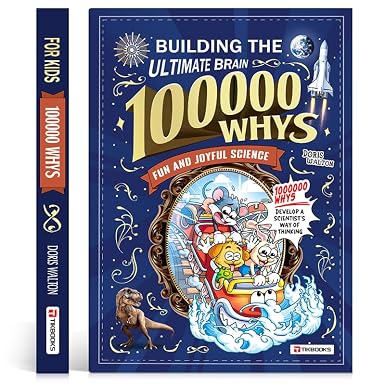
Spark curiosity and inspire a lifelong love of learning with Children’s Encyclopedia “Why 100,000?” – Building the Ultimate Brain. Designed for primary school students, this educational book encourages children to explore the world through fascinating questions, informative explanations, and engaging discoveries.
Children naturally want to understand how things work and why events happen. This encyclopedia transforms that curiosity into an enjoyable learning experience, helping young readers expand their general knowledge, discover new subjects, and develop a deeper interest in the world around them.
Whether used for independent reading, family learning sessions, or extracurricular education, this book offers an engaging way for children to continue learning beyond the classroom.
Discover the Answers to Fascinating Questions
One of the most appealing features of Why 100,000? is its question-driven approach to learning. Rather than presenting information like a traditional textbook, it encourages children to explore interesting questions and discover explanations in an accessible format.
From everyday mysteries to fascinating facts about science, nature, technology, and the universe, the book aims to satisfy children’s curiosity while introducing them to new ideas.
This approach can help turn ordinary reading time into an opportunity for discovery, encouraging children to ask more questions and explore topics that interest them.
Designed for Primary School Students
The encyclopedia is intended for young learners who are developing their reading skills and expanding their understanding of the world.
Its educational focus makes it suitable for children who enjoy discovering facts, asking questions, and learning about subjects beyond their regular school curriculum.
The book is listed for children approximately 5–12 years old, although the most suitable reading experience will depend on each child’s reading ability and interests. <Cite refs={[“turn627152search0″,”turn627152search1”]}/>
Explore a Wide Range of Topics
A children’s encyclopedia can introduce young readers to many areas of knowledge, helping them connect classroom learning with the world around them.
Topics associated with this type of educational resource include:
- Science: Explore natural phenomena and discover explanations for everyday observations.
- Nature and animals: Learn about living things, their environments, and the natural world.
- Space and astronomy: Discover planets, stars, and the mysteries of the universe.
- The human body: Develop a basic understanding of how the body works.
- Technology: Learn about inventions, machines, and technological discoveries.
- Earth science: Explore weather, landscapes, volcanoes, and other natural processes.
These subjects can help children develop a broader understanding of different fields and discover new interests. The exact topics and chapter contents should be checked against the book’s available edition.
Encourages Curiosity and Critical Thinking
Curiosity is an important part of learning. When children are encouraged to ask questions and seek explanations, they have more opportunities to develop their reasoning skills and understand new concepts.
The question-and-answer approach of Why 100,000? supports this spirit of discovery by encouraging young readers to think about the reasons behind everyday events and unfamiliar phenomena.
Parents and educators can make reading more interactive by asking children what surprised them, inviting them to explain a new fact in their own words, or encouraging them to think of additional questions.
These simple activities can help transform reading into an active learning experience rather than a passive exercise.
A Useful Resource for Learning Beyond School
Education does not have to stop when the school day ends. Supplementary reading gives children an opportunity to revisit familiar subjects, explore new interests, and develop independent learning habits.
Why 100,000? can be incorporated into a daily reading routine at home, used during quiet afternoons, or shared between parents and children as a family activity.
It can also complement schoolwork by introducing related ideas that encourage children to investigate topics more deeply.
A few pages of reading each day can provide a manageable way to build a regular reading habit while allowing children to explore subjects at their own pace.
Supports Independent Reading
Developing confidence in reading is an important milestone for primary school students. An encyclopedia organized around interesting questions can provide motivation for children who enjoy learning small pieces of information at a time.
Young readers can select questions that catch their attention, explore the answers, and share their discoveries with family members or classmates.
For younger children, reading together with an adult can help explain unfamiliar vocabulary and encourage discussion. Older primary school students may enjoy exploring topics independently and using newly discovered facts as starting points for further learning.
A Thoughtful Educational Gift
The Children’s Encyclopedia “Why 100,000?” makes a thoughtful gift for children who enjoy asking questions, discovering new facts, and exploring different subjects.
It is suitable for occasions such as:
- Birthdays and holiday celebrations.
- Back-to-school gifts.
- Rewards for academic effort.
- Gifts for curious young readers.
- Educational presents from parents, grandparents, and teachers.
Unlike toys that may be used only occasionally, an educational reference book can remain useful as a child’s interests develop and new questions arise.
Conclusion
Children’s Encyclopedia “Why 100,000?” – Building the Ultimate Brain is an educational reading resource designed to encourage curiosity, broaden general knowledge, and make learning beyond the classroom more enjoyable.
With its question-focused approach and emphasis on discovering new information, the book offers young readers an opportunity to explore different subjects, develop independent reading habits, and cultivate an interest in understanding the world.
For parents seeking an engaging addition to their children’s reading collection, this encyclopedia is a promising option for supporting everyday discovery, family learning, and a lifelong love of knowledge.
VIEW ON AMAZON